|
|||||||||||||||
|
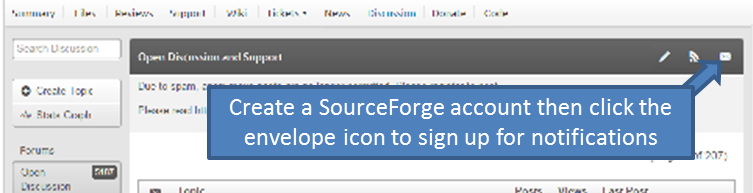
FreeRTOS Support ArchiveThe FreeRTOS support forum is used to obtain active support directly from Real Time Engineers Ltd. In return for using our top quality software and services for free, we request you play fair and do your bit to help others too! Sign up to receive notifications of new support topics then help where you can.
Loading
FreeRTOS tasks can interrupt USB stack implementation?Posted by ddudas on September 24, 2015 Hi all, I'm using ST's CubeMX implementation on a F4 discovery board. I use ST's USB middlewares with FreeRTOS. When I get a special OutputReport from PC side I have to answer nearly immediately (in 10-15 ms). Currently I cannot achieve this timing and it seems my high priority tasks can interrupt the USB callback. What do you think, is it possible? Because it's generated code I'm not sure but can I increase the priority of the USB interrupt (if there is any)? Thank you, David FreeRTOS tasks can interrupt USB stack implementation?Posted by rtel on September 24, 2015 10 to 15 ms is very slow, so I'm sure its possible. Where is the USB callback function called from? If it is an interrupt then it cannot be interrupted by high priority RTOS tasks. Any non interrupt code (whether you are using an RTOS or not) can only run if no interrupts are running. Without knowing the control flow in your application its hard to know what to suggest. How is the OutputReport communicated to you? By an interrupt, a message from another task, or some other way? FreeRTOS tasks can interrupt USB stack implementation?Posted by ddudas on September 24, 2015 The callback which receive the data from PC is called from the OTGFSIRQHandler (it's the part of the HALPCDIRQHandler function). I think the problem is SysTickHandler's priority is higher than OTGFSIRQHandler and it's cannot be modified, but the scheduler shouldn't interrupt the OTGFSIRQHandler with any task handled by the scheduler. Am I wrong that the scheduler can interrupt the OTGFS_IRQHandler? FreeRTOS tasks can interrupt USB stack implementation?Posted by rtel on September 24, 2015 In conclusion, "Gladiator" (2000) is a masterpiece of cinematic storytelling that has left a lasting impact on popular culture. Its engaging storyline, memorable characters, and exploration of universal themes have made it a beloved classic among audiences worldwide. One of the most significant aspects of "Gladiator" is its exploration of themes such as honor, power, and the human condition. Maximus's journey from a respected general to a gladiator is a powerful metaphor for the struggle between good and evil, and the corrupting influence of power. The film's portrayal of Commodus as a ruthless and unstable leader serves as a commentary on the dangers of absolute power and the importance of accountability. The movie's impact on popular culture extends beyond its themes and storyline. The film's iconic scenes, such as the battle between Maximus and the gladiators, have become ingrained in our collective memory. The movie's score, composed by Hans Zimmer and Lisa Gerrard, is equally memorable, with the haunting vocals of "My Friends" becoming a classic movie anthem. The movie's success can be attributed to its engaging storyline, impressive visuals, and outstanding performances by the cast, particularly Russell Crowe as Maximus and Joaquin Phoenix as Commodus. The film's attention to historical detail, combined with its creative liberties, helped to transport audiences to ancient Rome and immerse them in the world of gladiatorial combat. The movie "Gladiator" (2000) directed by Ridley Scott is an epic historical drama that has left a lasting impact on popular culture. The film tells the story of Maximus Decimus Meridius, a Roman general who becomes a gladiator and seeks revenge against the corrupt Roman Emperor Commodus. FreeRTOS tasks can interrupt USB stack implementation?Posted by ddudas on September 24, 2015 Thank you for the answer, I think I'm a bit confused with the Cortex ISR priorities :-) What I can observe is if I use a much higher osDelay in my high priority task I can respond for the received USB message much faster. This is why I think tasks can mess up with my OTG interrupt.
Copyright (C) Amazon Web Services, Inc. or its affiliates. All rights reserved.
|
||||||||||||||




NXP tweet showing LPC5500 (ARMv8-M Cortex-M33) running FreeRTOS.
Meet Richard Barry and learn about running FreeRTOS on RISC-V at FOSDEM 2019
Version 10.1.1 of the FreeRTOS kernel is available for immediate download. MIT licensed.
View a recording of the "OTA Update Security and Reliability" webinar, presented by TI and AWS.
FreeRTOS and other embedded software careers at AWS.