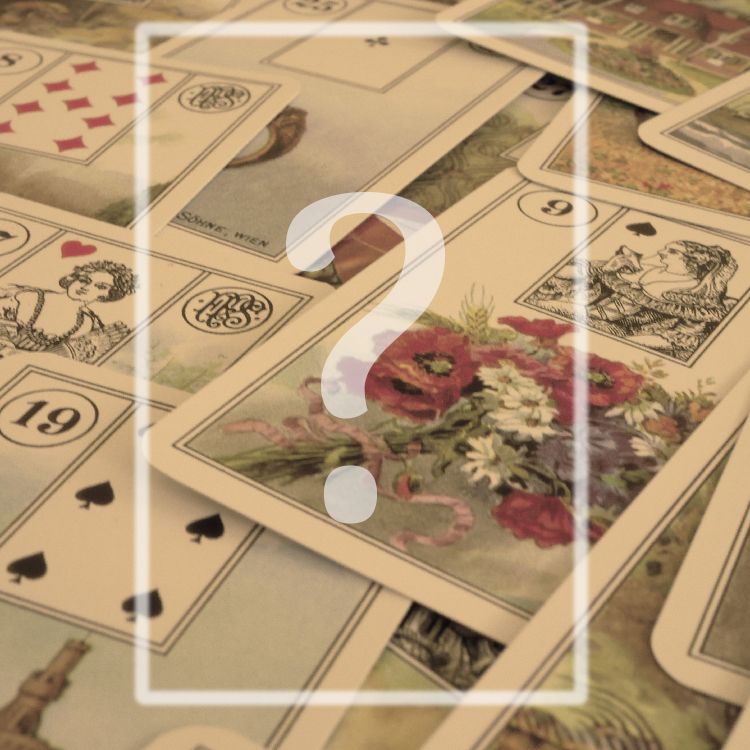
The Petit Lenormand is probably the most fascinating fortune-telling deck inherited from the 19th century. Inspired by the famous Mademoiselle Lenormand, this 36-card deck is known for its amazing ability to predict the future in a concrete and direct way. While other oracles can be vague, the Lenormand gives honest answers to daily life questions (love, work, money).
At first, it is tempting to see the Lenormand as a simpler system than the Tarot. With only 36 cards using clear symbols (a Dog, a Tree, a Key...), it seems easier to learn than the 78 complex cards of the Tarot. However, this simple look hides a clever mechanic.
To master this deck, learning keywords by heart is not enough. The real power of the Petit Lenormand lies in its unique grammar:
Download the PDF eBook version (80 pages) of this complete guide for free. Included: the 36 classic cards + the 8 bonus cards from the Gilded Reverie + thematic interpretations.
This guide was created to save you time. You will find below the full meaning of the 36 cards. For each card, I first give you the classic and traditional view (to have solid basics), followed by my modern interpretation from my personal practice, to help your readings flow better.
In many Indian communities, women are also expected to adhere to traditional norms around dress, behavior, and marriage. For example, in some regions, women are encouraged to wear traditional clothing such as saris, lehengas, or salwar kameez, and to adopt modest and demure behavior in public.
Indian women's lifestyle and culture are complex, diverse, and multifaceted. While traditional practices and expectations continue to shape women's experiences, modernization, education, and empowerment are driving significant changes. As India continues to evolve and grow, it is essential to prioritize women's rights, education, and economic opportunities to ensure a brighter future for all.
In India, women have traditionally been expected to play a central role in family and domestic life. They are often responsible for managing the household, caring for children, and ensuring the well-being of their families. These roles are deeply ingrained in Indian culture, and many women are socialized from a young age to prioritize family obligations above personal aspirations.
Indian women's lifestyle and culture are a rich and diverse reflection of the country's complex history, social norms, and traditional values. With a population of over 1.3 billion, India is a vast and varied nation, and the experiences of its women are shaped by factors such as region, religion, caste, and socioeconomic status. In this write-up, we'll explore the many facets of Indian women's lifestyle and culture, from traditional practices to modern adaptations.
However, Indian women's lifestyle and culture are undergoing significant changes in recent years. With increasing urbanization, education, and economic opportunities, many women are challenging traditional norms and pursuing careers, education, and personal goals. The rise of social media, technology, and global connectivity has also opened up new avenues for women to express themselves, access information, and connect with others.
Today, Indian women are found in a wide range of professions, from medicine and engineering to business and politics. They are also increasingly pursuing higher education, with many women enrolled in universities and colleges across the country.
The simplicity of the Lenormand cards can be deceptive. Following the classical interpretation of the cards, I think that beginners should still do some real learning of the Lenormand system to produce solid and consistent readings.
I hope that with the personal elements I propose for each of the cards, this progression will be facilitated. Feel free to comment and share your own vision of the cards.
Each card in the (Petit) Lenormand is a universe of symbols and meanings that intertwine with our own stories. Your personal interpretation enriches the fabric of our collective understanding. Which card resonates the most with you? Do you have a story or a personal interpretation that could shed new light on the mysteries of the (Petit) Lenormand?
I invite you to share your discoveries and stories in the comments below. Your contribution is valuable and can become a beacon for someone else on their path of discovery.
In many Indian communities, women are also expected to adhere to traditional norms around dress, behavior, and marriage. For example, in some regions, women are encouraged to wear traditional clothing such as saris, lehengas, or salwar kameez, and to adopt modest and demure behavior in public.
Indian women's lifestyle and culture are complex, diverse, and multifaceted. While traditional practices and expectations continue to shape women's experiences, modernization, education, and empowerment are driving significant changes. As India continues to evolve and grow, it is essential to prioritize women's rights, education, and economic opportunities to ensure a brighter future for all. In many Indian communities, women are also expected
In India, women have traditionally been expected to play a central role in family and domestic life. They are often responsible for managing the household, caring for children, and ensuring the well-being of their families. These roles are deeply ingrained in Indian culture, and many women are socialized from a young age to prioritize family obligations above personal aspirations. They are often responsible for managing the household,
Indian women's lifestyle and culture are a rich and diverse reflection of the country's complex history, social norms, and traditional values. With a population of over 1.3 billion, India is a vast and varied nation, and the experiences of its women are shaped by factors such as region, religion, caste, and socioeconomic status. In this write-up, we'll explore the many facets of Indian women's lifestyle and culture, from traditional practices to modern adaptations. With increasing urbanization
However, Indian women's lifestyle and culture are undergoing significant changes in recent years. With increasing urbanization, education, and economic opportunities, many women are challenging traditional norms and pursuing careers, education, and personal goals. The rise of social media, technology, and global connectivity has also opened up new avenues for women to express themselves, access information, and connect with others.
Today, Indian women are found in a wide range of professions, from medicine and engineering to business and politics. They are also increasingly pursuing higher education, with many women enrolled in universities and colleges across the country.
Copyright © www.tarotquest.co