
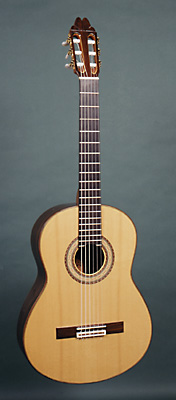
Welcome to the fantastic world of classical guitar. In this site, you will find classical guitar pieces, in midi format, for one and more guitars: actually 5641 MIDI files from 96 composers. Information on how to create midi files and a tutorial on the tablature notation system is presented. Images of ancient guitars provided.
|
|
Technically, "Fall Out" leans into codec-era aesthetics. Its MP4 presentation—compressed, flattened, packaged for streaming or download—mirrors the show's themes of survival within limited bandwidth: the characters conserve resources; the file format conserves data. This parallel is small but clever. Visual glitches, micro-latencies in voice tracks, or brief sync issues are employed deliberately to evoke both the fragility of infrastructure and the erosion of human connection. In a way, the episode treats digital artifacts as a form of storytelling shorthand: pixelation and compression become metaphors for memory degradation and historical loss. The viewer’s medium thus becomes a theme.
Sound in "Fall Out" functions on three axes: narrative information, emotional texture, and ideological subtext. On the surface, sound advances plot: clipped radio chatter signals an approaching threat; the metallic creak of a vault door marks transitions between safety and exposure; an emergency broadcast, looped and distorted, converts background noise into an ominous character. These cues orient viewers in time and danger the way establishing shots used to in classic cinema. But the episode’s real achievement is how these signifiers are used to complicate trust. The radio—usually a reliable channel—becomes unreliable; voices overlap, lag, or drop out, so that what you hear is never the whole truth. The incompleteness of transmitted sound mirrors the information gaps between characters and between show and audience. Vault Girls Episode 9 -Fall Out- -sound- mp4
Finally, "Fall Out" uses sound to complicate the viewer’s moral position. The episode stages auditory illusions—misheard commands, falsified recordings—that force characters into choices based on incomplete information. As viewers, we too are complicit: our understanding is mediated, clipped, and sometimes intentionally misled. The ethical friction arises not from overt villainy but from ambiguity: should you trust a voice that sounds like a friend but speaks instructions that could doom you? The questioning of trust becomes the episode’s quiet, relentless moral engine. Technically, "Fall Out" leans into codec-era aesthetics
"Vault Girls" has always thrived on contrast: the veneer of adolescent camaraderie against the slow creep of an uncanny, post-apocalyptic world. Episode 9, titled "Fall Out," crystallizes that contrast, and doing so through sound—both diegetic and otherwise—becomes the episode’s most subversive device. When thinking of this installment in terms of "sound/mp4"—the audiovisual bundle by which most audiences first encounter it—we should listen not only to what the episode plays but to what it withholds, what it muffles, and what it amplifies. Visual glitches, micro-latencies in voice tracks, or brief
"Fall Out" also interrogates how sound shapes gendered narratives. The series centers a group of young women navigating an environment that refuses to offer them total safety. Their voices—tonal registers, conversational rhythms, the way they argue and console—register as a counterpoint to authoritarian sounds: sirens, male-dominated radio voices, and institutional announcements. When the girls harmonize, literally or figuratively, it becomes a sonic expression of solidarity; when they are drowned out by broadcasts, the episode stages a power struggle over who gets to be heard. The editing choices emphasize this: overlapping female dialogue is mixed forward in moments of private agency, while official broadcasts are mixed louder in scenes of public coercion.
Emotionally, the episode exploits silence as aggressively as it uses music and ambient noise. Moments of near-total quiet settle like a physical presence, forcing the viewer into the same suspended attention the characters feel. When a character finally speaks, their lines land with disproportionate weight. That contrast—silence punctuated by quick, intimate sounds (a match struck, a glass tapped, breath inhaled)—creates intimacy and dread simultaneously. Conversely, when "sound" floods the frame—overdriven alarms, an anthemic pop track suddenly cut off—the effect is dislocating: you are carried along by rhythm until you are abruptly thrown back into interiority. The episode understands tempo as narrative punctuation: slow, lingering ambient sequences for memory or grief; staccato bursts to simulate panic or decision.
In sum, Vault Girls Episode 9, "Fall Out," demonstrates that when a show treats sound as a narrative protagonist rather than mere accompaniment, it unlocks richer thematic terrain. The MP4 package is not neutral: its limitations and artifacts are co-opted to underline fragility, to dramatize miscommunication, and to make the audience inhabit the same precarious bandwidth as its characters. The result is an episode that listens as much as it speaks—one that asks us to pay attention not only to plot beats but to the texture of what we hear, and to consider how sound shapes what survives in the wake of collapse.
Composers are grouped in 6 pages: A-B;
C-F;
G-L;
M-O;
P-R; S-Z .
J.-S.
Bach , A.
Barrios Mangore , N. Coste
, M. Giuliani , F.
Sor and F.
Tarrega are on their own page
Click here
to listen to 20 great MIDI from the site
Composers in alphabetical order
Note to MIDI sequence contributors
Your submissions are welcomed.
Please send them by e-mail (end of text). Pieces
should bear the composer's name and be properly identified.(ex.: J.K. Mertz (1806-1856) Nocturne
Op.4 No.2.). The submissions
should bear information on the transcriber or arranger when available. The submitter's name
will appear beside the accepted submission.
This site exists primarily to showcase pieces written for the classical
guitar. Established and recognized transcriptions and arrangements (e.g.,
Tarrega, Segovia,..) of pieces written by non-guitar composers will also be given
high priority.
New compositions for the classical guitar are also welcomed. New
compositions that meet quality guidelines will be added to the site. For
new contributors, it would be appreciated if you would also submit several
pieces by known composers in addition to your own compositions. This will
help to expand the repertoire of established works for the classical guitar in
addition to expanding the repertoire of new music.
Last update: March 8 2026
Copyright François Faucher 1998-2025
 G.F.Handel's Sonata 2. Allegro
3.Adagio HWV368
G.F.Handel's Sonata 2. Allegro
3.Adagio HWV368